

Photo by Anastasiya Badun from Pexels
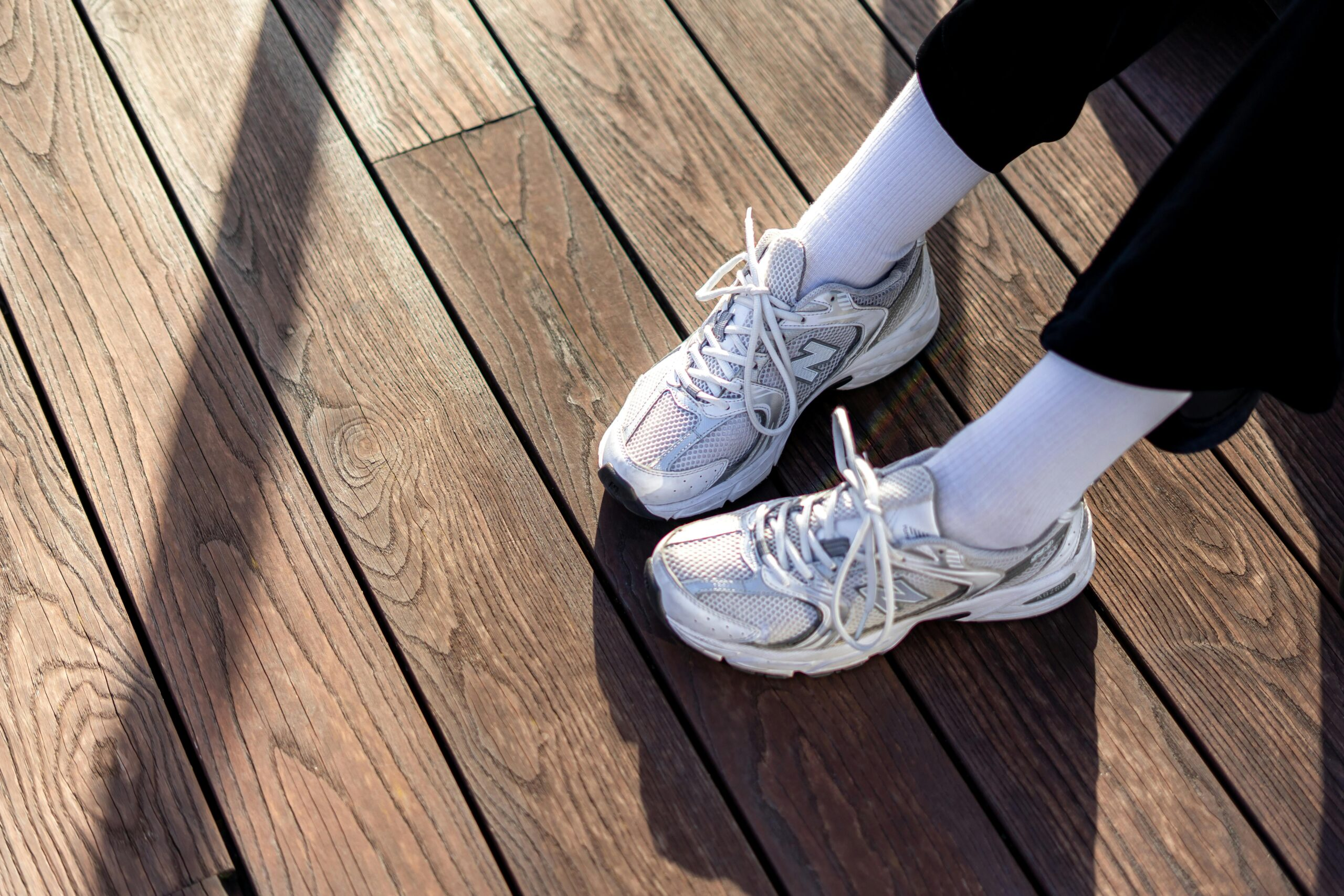
Alternative text: The image shows a high-angle view of a person’s feet and lower legs while sitting on a wooden deck. They are wearing white and silver New Balance 530 sneakers, tall white crew socks, and black trousers. Bright sunlight hits the brown wooden planks, casting long shadows across the deck.
Listen to the article:
The available audio has been created using OpenAI’s text-to-speech function
I am so excited for this week’s topic because I am a big fitness fiend. I love to move my body and challenge it to do things I never thought it could do. Despite it being a literal special interest of mine, even I struggle to be physically active sometimes.
It can be hard and even stressful to know where to get started; compounded with finding the time and energy to be active in our never-ending, busy lives? It makes sense why being physically active is an issue even with neurotypical people.
So, how do we get fit then? For the longest time, my mantra has been that you must be physically active in a manner that is sustainable for your life.
What is sustainable physical activity?
In other words, sustainable physical activity is about being reasonable about doing what you can do, and doing that consistently, because being consistent is better than doing nothing at all.
It’s all about being nice to yourself, recognizing the limitations of life, and just doing the best that we can.
It doesn’t mean what we always think exercise means (going to the gym filled with people and their rock-hard abs); it means just getting the body moving for the sake of our health and overall wellbeing.
How to do it?
To implement sustainable physical activity in your life, you need to identify the limitations of your time and physical abilities.
Finding Time
Time is pretty simple—how much time can you put aside for physical activity every day? While it’s good to prioritize time for physical activity, it is sometimes not feasible, so we need to make the most with what we’ve got.
For example, on more busier work days, I like to consider simple alternatives, like taking the stairs instead of the elevator/escalator, walking/biking to my destinations, parking farther in the lot to get extra steps, or walking around when taking a phone call. Again, any added movement to your life is better than nothing at all.
Respecting Your Body’s Limits
We also need to be mindful of what we can physically achieve. If you push yourself too much during your exercises, you will burn out. Your body will be too sore to do physical activity for the rest of the week, which will defeat the point of being physically active.
It will also likely decrease your desire to become active; I’m not sure many people look forward to near-torture exercise and intense soreness afterwards. Being realistic allows us to find joy in physical activity and see health results from consistency over time.
You may be reading all this and thinking that you are still dreading physical exercise, or unsure where to begin. Here are some of the tricks I use in my life to be sustainable:
Scheduled Programming
I enroll in sport or fitness programs with my municipality’s recreation centres, especially during the weekdays.
It is so hard to find the energy to get myself to the gym, especially on days that I work in-person, but I find it much easier when I have a social obligation to show up to a tennis lesson or yoga class. And once I’m there, I seem to have enough energy to be active.
More recently, I’ve been obsessed with ClassPass, which allows me to book fitness classes at fancy studios for a margin of the price.
Instructional Videos
On long days where I don’t have planned fitness classes, I do 5-10 minute instructional exercise videos at home (primarily pilates).
I love these because they’re short but effective, can be done in the comfort of your own home or other safe space, and often require minimal equipment (usually just a yoga mat). Though I may be reluctant to begin, I always feel good after finishing one of these videos.
Get the Ball Rolling
Sometimes I negotiate with myself to get to the gym. I recognize that sometimes I have energy but struggle with task switching, so I focus on one small task that I am willing to do and will bring me one step closer to getting to the gym, like filling up my water bottle.
Once I’ve done that task, it becomes easier to push myself into the rhythm of the rest of the steps necessary to get to the gym. Other times I negotiate by telling myself that I will do a very light exercise session; once I’ve started at the gym, though, I’m now mentally ready to take on a bigger exercise routine.
Conclusion
It was a pleasure talking about physical activity with you. Fitness and health are really big topics that I can talk about at length.
Are there other things you want me to talk about? Do you have any sustainable fitness tricks? Please let me know in the comments below. I’d love to find any reason to write more about my special interest!
Next time I will be tackling a topic I really struggle with: Getting through the nighttime routine (and surviving it!). Stay tuned 🙂

Alternative text: Infographic titled “Achieving Sustainable Physical Activity.” It depicts a transition from inconsistent activity to a consistent routine through a four-step loop: starting with small tasks, using instructional videos, enrolling in programs, and identifying personal limitations.
The available infographic has been created using Napkin.ai


Leave a Reply