

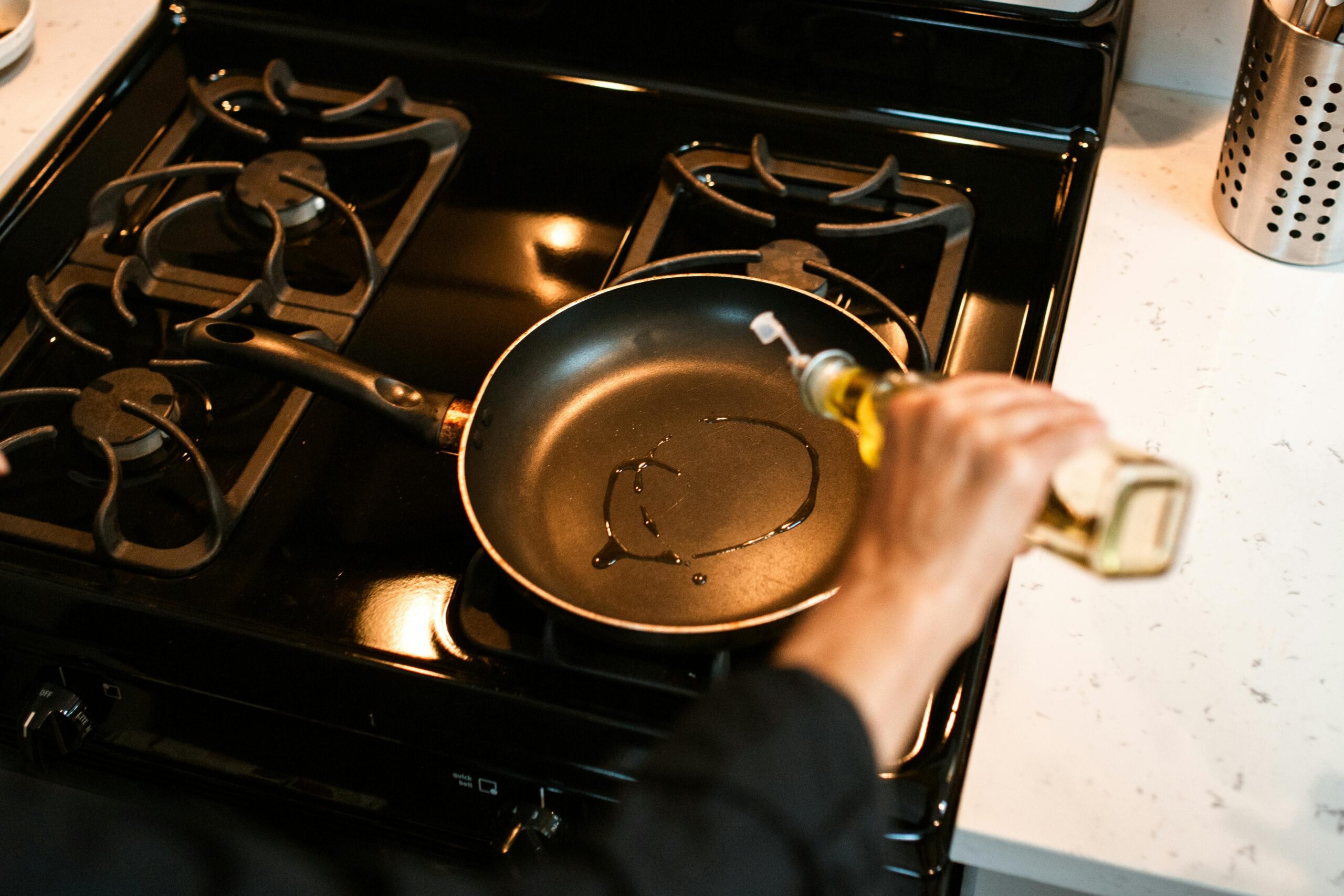
Photo by RDNE Stock project from Pexels
Alt text: Close-up of person pouring olive oil into a frying pan on a kitchen stove.
I’m not a bad cook; some would say I’m even a good cook. But I do not like cooking. It can quickly get overwhelming, be a sensory overload, and plain tiring. If I see a recipe with more than 10 steps, I avoid it immediately.
Fortunately I was able to avoid cooking for most of my life, but I’ve had to deal with it since living alone. In the time I’ve lived alone I have not become a Michelin star chef, but I have figured out enough to make cooking a little less painful.
Tip #1: The “Two-List” Grocery Strategy
Before you even begin to cook, you may need to fill your kitchen with ingredients to get started. I find it way to daunting to just walk into a grocery store and start deciding what to buy, so I like to make two grocery lists.
In my first list, I just make note of snacks and other non-meal foods I’d like to have in the house. This list is usually pretty easy to write up because of my repetitive food choices (if you only knew how many everything bagels I eat…).
In my second list, I write down the foods I would like to prepare during the week, and the ingredients I need to buy to make those meals. But what do you make? Your meal choices depend on where you are in your cooking skill level.
Tip #2: Start Simple (No Perfection Required)
If you’ve never cooked before, start slowly to develop your skills, reduce your fears and build your confidence. You can focus on developing one skill at a time, and creating meals that only involve that one skill (plus the others you may already know).
For example, you can start with a basic meal of instant noodles with frozen vegetables and rotisserie chicken. Sure, it incorporates some processed foods, but it’s a meal with good protein, fats, and carbs. We’re not looking for perfection; we’re looking for comforting meals that will keep us nourished.
There are many meals you can make that help you start cooking while keeping you filled up. Here are some of my favourite basic meals I make:
- Instant noodles with vegetables (frozen or canned) and protein (e.g., cooked chicken, frozen cooked shrimp, sliced sandwich meat, etc.)
- Mac and cheese with frozen broccoli (heated in microwave), parmesan, and nutritional yeast (tuna is also optional)
- Rice cooked with frozen vegetables, paired with a protein (often Beyond Meat steak bites) and my favourite hot sauce (Samyang Buldak Hot Chicken Flavour Sauce)
- Store bought caesar salad with oven baked chicken thighs
Tip #3: Level Up with Minimal Effort
Once you get the hang of cooking, you will be able to execute these meals with less effort, and maybe even consider more intricate meals. Personally, I still don’t really make fancy meals. At this point, I only make fancy meals when my partner requests them. He often asks me to make him Persian meals, as I come from a Persian family and know the cuisine well.
If you think you’ve gotten the hang of cooking and want to do more without the extra effort, I strongly suggest considering food prep boxes, such as GoodFood. With these meal boxes, you choose how many and what meals you’d like for the week, and they deliver everything you need (along with the recipe) right at your door.
Though food boxes can get pricey, I used to really enjoy their easy to follow recipes and tasty meals. I also loved how it allowed me to try new ingredients that I’d never considered using in my food, like plantains or shallots. Every food box is different, but with GoodFood I used to really appreciate their fresh ingredients too, like their pasta! I don’t get meal boxes anymore simply because I’m a graduate student on a tight budget, but I would definitely get them again if I won the lottery next week! Or maybe I’d hire a private chef…
Tip #4: Set Sustainable Expectations
Overall, what is important about cooking is about setting sustainable expectations. Your foods don’t need to look colourful or plated beautifully. Your meals need to be ones that are capable for you to make, and are as nourishing as you can make them.
If all you can manage for dinner is a cream cheese bagel and a can of tuna, then that’s all you can really do. If we don’t focus on the expectations neurotypical societies place on us, then would you really be as pressured about your cooking skills? Do what you can, celebrate the little wins, and try to enjoy the culinary journey.
Conclusion
I only recently started living alone, so my culinary journey is still in its early days. Are there any more experienced chefs who would like to share some tips for getting by? Please share them in the comments! Perhaps I could also learn something new. Next time I am bringing romance into the air to talk about dating tips! I hope you stick around until then 🙂

Alt Text: An infographic titled “How to Make Cooking Less Scary,” featuring four tips for simplifying meal prep. Tip 1 suggests a “Two-List” grocery strategy for snacks and planned meals. Tip 2 introduces a simple formula: Carb Base + Veggies + Easy Protein. Tip 3 suggests using meal prep boxes to reduce mental load. Tip 4, “The Golden Rule,” encourages setting sustainable expectations and ignoring societal pressure for perfection. The footer includes the URL littlebirdieblog.ca.
The available infographic has been created using Gemini’s nano banana pro
Leave a Reply